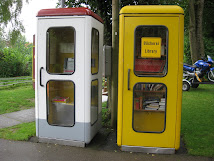
Brand experience is the experience of the brand that companies want to give. Customer experience is the experience of the brand that customers get.
Unfortunately, these two are often not the same.
Showing posts with label Business. Show all posts
Showing posts with label Business. Show all posts
Widespread paradox
Companies with the most data about their customers find it most difficult to use it.


What Steve Jobs and Michelangelo have in common
According to Fast Company Steve Jobs gave the following business advice to Nike a few years back when they launched the iPod/Nike collaboration: "Get rid of the crappy stuff".
"I expected a little laugh," Nike president and CEO Mark Parker says of the exchange. "But there was a pause and no laugh at the end."
Jobs' comment is akin to one of my favorites, namely Michelangelo's when he was asked how he could create a sculpture as magnificent as David. He said, “I carve away everything that isn’t David.”
(This post was originally published in April, 2010)
"I expected a little laugh," Nike president and CEO Mark Parker says of the exchange. "But there was a pause and no laugh at the end."
Jobs' comment is akin to one of my favorites, namely Michelangelo's when he was asked how he could create a sculpture as magnificent as David. He said, “I carve away everything that isn’t David.”
(This post was originally published in April, 2010)
The core of strategy
"The core of strategy work is always the same: Discovering the critical factors in a situation and designing a way of co-ordinating and focusing actions to deal with those factors."
From Good Strategy/Bad Strategy by Richard Rumelt. No more, no less. Brilliantly put.
From Good Strategy/Bad Strategy by Richard Rumelt. No more, no less. Brilliantly put.
Choose also what not to do
Just read a brilliant article on the essentials of strategy: Ditch the To-Do list and start a Not-To-Do list. Distinguish between To Do and To Die For. We tend to forget that strategy is not only about choosing what to do, but also about choosing what not to do.
The article is written with an innovation perspective but the principle applies to all kinds of strategy. Remember what Michelango answered when asked how he could create a sculpture as magnificent as David: "I carve away everything that isn't David".
It also applies to how we approach our work in general. I've worked with a performance consultant over the years when I was at Levi's and also at Lego, and I'm still inspired by his approach.
One of his principles is that potential - interference = performance. Interference can be many things but often it's dressed as a hell-bent focus on tasks. We buzz around all day at the office busy doing tasky stuff, when what we should be focusing on is the purpose and objectives, the bigger goals.
Stephen Covey and others promote the important/urgent matrix and that's a good tool to create awareness of just how much time we spend on disproportionately time-consuming tasky stuff. But ultimately, it's the mindset that matters. Gerry, the consultant, would always challenge us to get clear on the purpose of our job and the business and whether a given task was aligned with the purpose. If it was not, bye-bye task.
It's really hard to do! It's like taking a leap into the unknown, a leap of faith. What if I don't do this task, what will happen, what might I miss, will the earth stop turning, will the sun still rise?
And it's just as hard to choose what not to do as part of a strategy. But it's among the most important choices we can make. Create a clearing so you can see the forest in there between all the trees. And start chopping.
Read the full article in Business Week here.
The article is written with an innovation perspective but the principle applies to all kinds of strategy. Remember what Michelango answered when asked how he could create a sculpture as magnificent as David: "I carve away everything that isn't David".
It also applies to how we approach our work in general. I've worked with a performance consultant over the years when I was at Levi's and also at Lego, and I'm still inspired by his approach.
One of his principles is that potential - interference = performance. Interference can be many things but often it's dressed as a hell-bent focus on tasks. We buzz around all day at the office busy doing tasky stuff, when what we should be focusing on is the purpose and objectives, the bigger goals.
Stephen Covey and others promote the important/urgent matrix and that's a good tool to create awareness of just how much time we spend on disproportionately time-consuming tasky stuff. But ultimately, it's the mindset that matters. Gerry, the consultant, would always challenge us to get clear on the purpose of our job and the business and whether a given task was aligned with the purpose. If it was not, bye-bye task.
It's really hard to do! It's like taking a leap into the unknown, a leap of faith. What if I don't do this task, what will happen, what might I miss, will the earth stop turning, will the sun still rise?
And it's just as hard to choose what not to do as part of a strategy. But it's among the most important choices we can make. Create a clearing so you can see the forest in there between all the trees. And start chopping.
Read the full article in Business Week here.
Vækstdagen 2011
To my Danish readers: I will be speaking at the annual Vækstdag February 10 in Copenhagen about Brand As Strategy and why Branding is dead while the Brand is very much alive. More info and registration at Vækstdagen 2011. For an immediate view on the topic, pls read the post below.
Branding is dead, long live the brand
Branding is dead, long live the brand. What do I mean by that?
All companies are building their brand(s) every day, it's inevitable. But many don't realize it and have no plan or system for it which can have dire consequences. Perhaps even worse, many think that building the brand has to do with simply raising awareness of it and spending a lot of $$ on campaigns, and much less with delivering value to the customers in a specific and consistent way.
The word 'branding' has come to mean slapping a logo and a cute name on an expensive piece of packaging and then promoting the bejesus out of it. It has come to mean something we do at the end of the product development process, when we are about to launch. It has become superficial, disconnected from the product, the company and the people behind it. This saddens me so, because when approaching the brand this way, we cannot leverage it, we cannot maximise its potential, we cannot serve customers, and we cannot create or develop a business around it.
This is why I say that 'branding' is dead. The brand, however, is very much alive, and in fact more important than ever.
But does brand really matter these days, you might ask, when more and more marketing takes place between people eg on social media networks?
Why yes. Indeed, in a me-too marketplace where everybody has access and can express themselves about any brand any time (and this openness, in my book, is a great thing), the importance of developing and managing a highly differentiated brand - which starts with delivering distinct and superior customer value consistently - is more critical than ever.
We can only do so by putting the brand at the heart of our business strategy. Apart from simplifying the complex, making objectives clear and realistic, and giving direction for everyone in the company, putting the brand at the center ensures that everyone understands the brand promise and works on delivering this to customers every day. And it helps broadening yet clearly specifying the options for business development and growth.
The brand is what people buy. The product, the promise, the experience, and the conviction behind it. Meet and exceed customers' expectations and maximise business potential by putting the brand at the heart of your business strategy.
NB. To my Danish readers: I will be talking about this at the annual Vækstdag February 10 in Copenhagen. More info at Vækstdagen 2011.
All companies are building their brand(s) every day, it's inevitable. But many don't realize it and have no plan or system for it which can have dire consequences. Perhaps even worse, many think that building the brand has to do with simply raising awareness of it and spending a lot of $$ on campaigns, and much less with delivering value to the customers in a specific and consistent way.
The word 'branding' has come to mean slapping a logo and a cute name on an expensive piece of packaging and then promoting the bejesus out of it. It has come to mean something we do at the end of the product development process, when we are about to launch. It has become superficial, disconnected from the product, the company and the people behind it. This saddens me so, because when approaching the brand this way, we cannot leverage it, we cannot maximise its potential, we cannot serve customers, and we cannot create or develop a business around it.
This is why I say that 'branding' is dead. The brand, however, is very much alive, and in fact more important than ever.
But does brand really matter these days, you might ask, when more and more marketing takes place between people eg on social media networks?
Why yes. Indeed, in a me-too marketplace where everybody has access and can express themselves about any brand any time (and this openness, in my book, is a great thing), the importance of developing and managing a highly differentiated brand - which starts with delivering distinct and superior customer value consistently - is more critical than ever.
We can only do so by putting the brand at the heart of our business strategy. Apart from simplifying the complex, making objectives clear and realistic, and giving direction for everyone in the company, putting the brand at the center ensures that everyone understands the brand promise and works on delivering this to customers every day. And it helps broadening yet clearly specifying the options for business development and growth.
The brand is what people buy. The product, the promise, the experience, and the conviction behind it. Meet and exceed customers' expectations and maximise business potential by putting the brand at the heart of your business strategy.
NB. To my Danish readers: I will be talking about this at the annual Vækstdag February 10 in Copenhagen. More info at Vækstdagen 2011.
What great companies continuously ask
'Can we save money here, can we charge more there? Great companies don't do that. They ask, 'How can we make it easier, simpler, more fun to do business with us?' They look at the whole experience (Vernon Hill)
This is design thinking
Met up with my old friend, Wickie, today and discussed approaches to business and organizational transformation and progress. One of the hot approaches these days is 'design thinking'. I've always had an issue with the term because:
- Like so many other specifically coined terms, it becomes a buzz word that covers everything and nothing, and in the end no one understands what it is. Like 'experience economy', 'social media' and 'user-driven innovation' which have become very misunderstood (see my posts about the latter two 'It's the mindset, not the media' and 'What is user-driven innovation - and what is not').
- The spokespeople for design thinking tend to - as with all buzz things - describe it in long, very unconcrete terms that leave me none the wiser about what exactly design thinking is and why I should care.
- Design thinking fundamentally consists of elements that are very well-known from disciplines like brand management and web/IT development, so what's new?
- A holistic, cross-disciplinary approach to problem-solving that uses
- ... a prototyping, iterative process in order make stuff (change, processes, things, plans)
- ... tangible very quickly.
How to sell more bread - letter to my bakery
This is an email I recently sent to one the bakeries where I buy my bread. 'Lagkagehuset' is an excellent bakery chain in Copenhagen who has become very successful with their baked goods and retail concept.
But a crucial component is missing which not only annoys me every time I go there but also would help them sell even more:
Dear Lagkagehuset,
I love good bread, therefore I buy a lot of it at your bakery. I also love to know what's in the bread - after all, it's the ingredients that determine which bread(s) I buy.
Unfortunately there is no information in your stores or on your website about this. So I have to ask the shop assistant every time. They don't always know what's in the various breads, it takes time to ask and (perhaps) get answers, and this just makes the queue behind me even longer.
Thus, I often don't ask - I hate to waste the other customers' time - and the result is that I sometimes come home with a 'wrong' bread because I've just chosen the nearest one. This is a great annoyance. Most likely I'm not the only one who's experiencing this.
So here's a few ideas on how to solve that issue, using your greatest asset and your two primary customer touch points:
Kind regards,
Helene Venge
But a crucial component is missing which not only annoys me every time I go there but also would help them sell even more:
Dear Lagkagehuset,
I love good bread, therefore I buy a lot of it at your bakery. I also love to know what's in the bread - after all, it's the ingredients that determine which bread(s) I buy.
Unfortunately there is no information in your stores or on your website about this. So I have to ask the shop assistant every time. They don't always know what's in the various breads, it takes time to ask and (perhaps) get answers, and this just makes the queue behind me even longer.
Thus, I often don't ask - I hate to waste the other customers' time - and the result is that I sometimes come home with a 'wrong' bread because I've just chosen the nearest one. This is a great annoyance. Most likely I'm not the only one who's experiencing this.
So here's a few ideas on how to solve that issue, using your greatest asset and your two primary customer touch points:
- Talk about the bread on your website - tell us about them, what's in them, why, and what makes each of them special. You'll delight your customers, and you'll also create more interest.
- Same thing goes for your stores. Use them to tell us about what you're selling. Don't put up tiny little signs at each type of bread - the customers can't see what's written anyway. But you could develop small hand-outs, like set cards, about the breads which the customers can read in the store and/or bring home. Use them as bagstuffers, too. Customers will happily put it on their fridge at home if it's handy, stylish, and interesting enough and voila - instant in-home advertising 24/7.
- You could also consider large nicely framed posters in the stores that introduces each bread. Put on the right wall in the customer area where everyone can see it, it'll not only look good, it'll make for interesting reading and passing of the time as customers wait for their turn. Need I mention, they'll be prone to buy more and be happier with their purchase.
Kind regards,
Helene Venge
The purpose of companies
The general wisdom contends that the purpose of a company is to create shareholder value. I say it is to create and keep customers. If done well, this helps to increase profits, which then increases shareholder value. Focusing squarely on shareholder value is a short-term perspective, leading to short-term results.
The goal is long-run value - and the customer is the source of that value. So the customer must be the primary focus of any business, not shareholder value. By shifting the focus, you open up a broader range of opportunities that you otherwise just can't see.
The goal is long-run value - and the customer is the source of that value. So the customer must be the primary focus of any business, not shareholder value. By shifting the focus, you open up a broader range of opportunities that you otherwise just can't see.
It's what we do that makes the difference
We are what we repeatedly do (Aristotle). In other words, if you want to be something else, do something else. Yes, this also goes for companies and brands. If your customers are experiencing your company in ways you are not happy with, you have to change your company's behaviour.
It's the mindset, not the media
A friend of mine told me the other day of a roundtable he'd been in with a number of the biggest companies in Denmark to discuss business issues. He told me that one of the most prevalent issues among these companies was: What do we do with social and digital media?
In this post, I will put forward my humble take on the issue, based on my experience working with business and brand strategies over the years including the elusive answer to the above mentioned question. The thing is, the question is actually wrong. It's not a matter of media but of mindset. Let me explain.
Why are we still discussing this?
You see, I was surprised by the prevalence of the issue. And then again not. Surprised because we discussed the issue already back in 2005 and surely we are pretty clear by now, aren't we?
Not surprised because indeed big companies are built by complex structures that complicate the strategic utilization of social and digital media and all other activities that are two-way between company and consumers. I know this from having been in several large corporations, including one of the Danish companies participating in the roundtable.
The very same day I came across this recent TED talk which concludes that:
But then I need to remember the 1st point. Or as John Lennon put it: 'Life is what happens when you're busy making other plans'.
He wasn't talking about business but often this applies to corporations, too. So busy planning their business that they lose sight of what's happening and they find themselves being distanced from real life, their consumers' life that is.
And this is probably part of the reason why social and digital media is still an unsolved mystery for many of them and why they're uncertain and unsettled about embracing it. And why, unfortunately, many are downright scared of opening up to their consumers, thinking of the risk of quick dethroning - the 2nd point. Well, we only have to fear it if we've got secrets to hide.
I went back into the annals and dug out a conference talk I did in, that's right, 2005 - excuse me one second while I dust it off, achoo.
It was an IPA conference in London, and as European Digital Director at Levi's I was asked to talk about how we used digital media to build the brand and cut through the clutter. I ended up talking about how to harness your consumers' engagement in the brand - or distributing brand energy as the TED talk would call it.
Let me re-state a few key points from the talk which I believe hold true today and maybe, hopefully, they can be useful to you.
1) The way we talk about it shapes our perception and thus our reality
When I prepared my talk back then, I was puzzled by the language that the conference programme was using. It talked about:
That's problem no. 1 right there. It's not a 'we vs. them'. It's not a fight. But if you keep putting on those glasses, that's what you'll see.
2) If the mountain won't come to Moses...
Companies exist to fulfill a consumer need. Consumers pay companies to fulfill it. Herein lies the symbiotic relationship. Interestingly, there's a number of opposing forces within this relationship that makes it difficult for companies and consumers to get along, summed up in the brand paradox:
 As responsible managers we align with company policies, governance, processes, and planning cycles because they are there so that the company can operate. It's just that consumers don't really give a hoot about this and why should they. And because they now have a voice, or rather a lot of voices, we need to also align with their way of doing things. Indeed, Moses needs to come to the mountain.
3) Social and digital media are means, not an end
It's not about using social or digital media or not. It's about whether your company is willing and able to open up to its consumers. A Twitter stream does not make a company more open or cool (or social or digital). Saying 'We believe we can learn from our consumers and we want to thank them for buying our products and show them respect by being transparent and honest in everything we do' and behaving accordingly does.
Once you've decided that you're ready to do this, are clear on the purpose and what you aim to achieve, understand the implications, and have a strategy for doing it - then you can start defining the tactics. Among these tactics may be social and digital media, but they are not the strategy and should not define your objectives. Be very careful of the tail wagging the dog.
4) Join up and align the touch points
Social and digital media enable a faster and more efficient roll-out of your strategy towards more openness and of building that deeper relationship with your consumers.
But by all means, don't think that openness and a deeper relationship means 'Let's have that creative young fellow in the digital marketing dept create a Facebook page for us, and maybe a Twitter stream and then he can write some stuff when we launch the next product'.
Don't forget that 'the new openness' must also manifest itself in internal communication and information-sharing and similarly in all external contact points. You can tweet all you want but if your customer has a bad experience with a sales rep, it doesn't really help.
The internal information flow must be constant, efficient, and substantial so the left hand knows what the right hand is doing: Customer service, sales/retail, product quality, legal, marketing, research, and so on, they all need to have the same (detailed level of) information about the happenings in the company and about the consumer in order to support the openness objective.
5) It isn't easy but the returns can be great
Don't worry, be happy. See social and digital media as a blessing. Understand that social and digital media allow your consumers to engage with your brand and your company in ways that were impossible before. Think of it this way:
6) Learn from the learnings
As a final note, a few Do's and Dont's and remember that the democratization of media is here to stay, so you might as well get used to it, with all its challenges and opportunities:

In this post, I will put forward my humble take on the issue, based on my experience working with business and brand strategies over the years including the elusive answer to the above mentioned question. The thing is, the question is actually wrong. It's not a matter of media but of mindset. Let me explain.
Why are we still discussing this?
You see, I was surprised by the prevalence of the issue. And then again not. Surprised because we discussed the issue already back in 2005 and surely we are pretty clear by now, aren't we?
Not surprised because indeed big companies are built by complex structures that complicate the strategic utilization of social and digital media and all other activities that are two-way between company and consumers. I know this from having been in several large corporations, including one of the Danish companies participating in the roundtable.
The very same day I came across this recent TED talk which concludes that:
- The bigger the corporation/brand the more force is required to change it (think Titanic),
- While it takes time to build a brand, it can be quickly dethroned (think BP),
- While many marketeers lie sleepless at night at the thought of consumers gaining control of the brand, the (for marketeers entropic) brand energy that consumers create is actually a good thing (think Lego).
But then I need to remember the 1st point. Or as John Lennon put it: 'Life is what happens when you're busy making other plans'.
He wasn't talking about business but often this applies to corporations, too. So busy planning their business that they lose sight of what's happening and they find themselves being distanced from real life, their consumers' life that is.
And this is probably part of the reason why social and digital media is still an unsolved mystery for many of them and why they're uncertain and unsettled about embracing it. And why, unfortunately, many are downright scared of opening up to their consumers, thinking of the risk of quick dethroning - the 2nd point. Well, we only have to fear it if we've got secrets to hide.
I went back into the annals and dug out a conference talk I did in, that's right, 2005 - excuse me one second while I dust it off, achoo.
It was an IPA conference in London, and as European Digital Director at Levi's I was asked to talk about how we used digital media to build the brand and cut through the clutter. I ended up talking about how to harness your consumers' engagement in the brand - or distributing brand energy as the TED talk would call it.
Let me re-state a few key points from the talk which I believe hold true today and maybe, hopefully, they can be useful to you.
1) The way we talk about it shapes our perception and thus our reality
When I prepared my talk back then, I was puzzled by the language that the conference programme was using. It talked about:
“Advertising is on its deathbed and will not survive for long”
“A fatal case of new technology”
“Confronting the challenge”
“As the reality of opt-in sets in”What is this, the emergency room? Or are we at war? Are we all about to die? Should we pull out the first aid kit? What's going on? Clearly, digital and social media was seen as a curse, something to fight so that 'we' could survive.
That's problem no. 1 right there. It's not a 'we vs. them'. It's not a fight. But if you keep putting on those glasses, that's what you'll see.
2) If the mountain won't come to Moses...
Companies exist to fulfill a consumer need. Consumers pay companies to fulfill it. Herein lies the symbiotic relationship. Interestingly, there's a number of opposing forces within this relationship that makes it difficult for companies and consumers to get along, summed up in the brand paradox:

3) Social and digital media are means, not an end
It's not about using social or digital media or not. It's about whether your company is willing and able to open up to its consumers. A Twitter stream does not make a company more open or cool (or social or digital). Saying 'We believe we can learn from our consumers and we want to thank them for buying our products and show them respect by being transparent and honest in everything we do' and behaving accordingly does.
Once you've decided that you're ready to do this, are clear on the purpose and what you aim to achieve, understand the implications, and have a strategy for doing it - then you can start defining the tactics. Among these tactics may be social and digital media, but they are not the strategy and should not define your objectives. Be very careful of the tail wagging the dog.
4) Join up and align the touch points
Social and digital media enable a faster and more efficient roll-out of your strategy towards more openness and of building that deeper relationship with your consumers.
But by all means, don't think that openness and a deeper relationship means 'Let's have that creative young fellow in the digital marketing dept create a Facebook page for us, and maybe a Twitter stream and then he can write some stuff when we launch the next product'.
Don't forget that 'the new openness' must also manifest itself in internal communication and information-sharing and similarly in all external contact points. You can tweet all you want but if your customer has a bad experience with a sales rep, it doesn't really help.
The internal information flow must be constant, efficient, and substantial so the left hand knows what the right hand is doing: Customer service, sales/retail, product quality, legal, marketing, research, and so on, they all need to have the same (detailed level of) information about the happenings in the company and about the consumer in order to support the openness objective.
5) It isn't easy but the returns can be great
Don't worry, be happy. See social and digital media as a blessing. Understand that social and digital media allow your consumers to engage with your brand and your company in ways that were impossible before. Think of it this way:
As consumers take (more) control, we can create meaningful collaborations with them on both parties’ terms. If meaningful enough for them, they will do the marketing for you.There will be lots of comments out there that you won't like and that you feel are huge misunderstandings, but see them as a reflection of your company's behavior and adjust so your consumers experience you the way you intend.
6) Learn from the learnings
As a final note, a few Do's and Dont's and remember that the democratization of media is here to stay, so you might as well get used to it, with all its challenges and opportunities:

Music and Branding #2
This is a translation of the column I'm writing for Danish industry publication Markedsføring (Marketing).
Music and Branding deals with the trinity of brands, bands, and fans. It looks at how brands use (or don't use) music as part of their branding and marketing efforts and how bands collaborate with brands. Some do it well, others badly. Others just really boring. It also looks at new ways and models for collaboration.
This column (no. 2) was published in issue #9 August 24th, 2010 and focuses on the importance of taking an informed stand on music and branding, even if it means choosing not to include music as part of the brand strategy (and column no 1 is here).
In issue 7, I introduced 'the music staircase' from Swedish Heartbeats Intl - we resist the temptation of calling it stairway to heaven. It's a simple model used to assess how sophisticated a given brand is in terms of working with music as part of its strategy. On the first step, music is used unconsciously and entirely ad hoc. On the final step, music is an integrated part of the brand strategy.
But why is it so important for brands to deal with and have a clear view on music?
But why is it so important for brands to deal with and have a clear view on music?
Music appears to be more important than sex
In 2008, the research agency Millward Brown et al conducted a study of the relationship between music, advertising, brands, and consumers, "Bands & Brands, How Music Communicates With People". The study shows that:
- Our consumption of music has never been greater. Music has become ubiquitous.
- Music is something all of us love or like a lot. No one dislikes music.
- Our senses, brain, and body is influenced by music. Music can influence the beating of the heart and our emotions.
- Music can communicate atmosphere and 'transport' us to places, we've been, and to moments in our lives.
- 60% listen to music every day.
- 61% say that music changes their physical wellbeing.
- 85% say that music changes their mood.
- Music is the thing most people won't live without. Music beats computer, mobile phone, TV, and even sex.
If this isn't enough reason to consider music as a fixed component in the brand strategy, then this might help: A study by professor in music psychology Adrian North and professor in psychology David Hargreaves shows that brands using music that match their identity have 96% greater recall than brands with mis-matching or no music.
Tired of ads, not of music
Are you still doubtful, consider this: Tens of thousands of brands are launched every year and only few last. We are exposed to an increasing amount of messages each day, let's say 5,000. We remember 10% of these at the most, compared to 33% 50 years ago. In fact, we are so cleverly designed that the more ads we're exposed to, the fewer we remember.
Not so with music.The more music available to us, the more we engage in it. Today, an iPod can host 40,000 songs compared to the few tunes we might be lucky to hear through a lifetime 100 years ago. According to the Millward Brown study, today we consume music through on average 6 different devices, from the TV to the mobile. We never get tired of music, perhaps not counting the neighbor's party on a week night.
People create music, music create people
We don't get tired of music because it arouses emotions and influences our physical feelings. Human beings are born with rhythm and music in our bodies. Scientific research has shown that out of the 5 senses, hearing is developed first in the fetus. Already by the 18. week the fetus is able to hear the heartbeat of the mother.
Music follows us through life and plays a role at all big events and milestones. In many cultures, music is used to awaken the gods and the forces of nature. Music is an element is us human beings.
We use music actively to get in a certain mood. We use music to express our choices, identity, and own personal brand. Music creates energy and on a group level it engages people across age, gender, and culture and encourages social action, interaction, and transaction. Just have a look at the programme on national TV DR2 'Songs that Changed the World'.
Does this sound familiar? Isn't all of this exactly what us marketing folks are so keen to achieve with the brands we manage on behalf of the shareholders and consumers? Maybe not change the world, but then change at least the individual consumer's world in a big or small but certainly positive way? If not, then what's our reason for doing what we do?
This is why it's so important that brands find out how they should associate themselves with music. Not all brands need to or ought to get all the way to the final step of the music staircase. But all brands need to - as a minimum - develop a conscious and well-informed view on and a systematic approach to the use of music. Also if this means choosing not to use music at all.
The opposing forces of every business
"Every business faces the opposing forces of the pull for more growth against the pull for more profitability; the demand to show profit today against the need to invest in the company’s future; and the call for optimizing the whole against the tendency of individual parts to maximize their own performance. The three performance tensions — growth versus profitability, short term versus long term, and whole versus parts — provide fundamental energy that can be harnessed to deliver superior, sustainable results."
(Ken Favaro and Saj-nicole Joni in "Getting Tensions Right" in Strategy+Business 24 Aug, 2010)
(Ken Favaro and Saj-nicole Joni in "Getting Tensions Right" in Strategy+Business 24 Aug, 2010)
Try before you buy
Adidas has launched a new shoestore in Japan, in fact it's a shoe store and and running club in one, Adidas Runbase. Besides perusing and purchasing gear experienced and rookie runners can borrow shoes, get tips from running experts, take the shoes out for a run, shower after your run, etc. The ultimate try-before-you-buy experience.
Ikea economy
We know about Apple economy, ie other companies creating businesses off Apple products (eg iPod accessories).
Here's Ikea economy: http://springwise.com/weekly/2010-08-04.htm#e
Here's Ikea economy: http://springwise.com/weekly/2010-08-04.htm#e
Walk the Talk
Quote of the day: "Advertising is sexy, PR is influential, and design is uplifting; but it's the substance of what you do that matters most" (Nicholas Ind and Majken Schultz in Booz Allen's Strategy+Business, 26 June 2010).
Organizations, you need to get on board with this if you aren't already. Branding is about the whole organization and its stakeholders, not the campaigns and the marketing department.
What companies need to focus on
Fifty years ago, Peter Drucker said that "any business enterprise has two - and only these two - basic functions: Innovation and marketing".
It's unfortunate that so many companies still struggle with both; the good news is that there is so much potential for improvement and progress.
Subscribe to:
Posts (Atom)

 Posts
Posts